
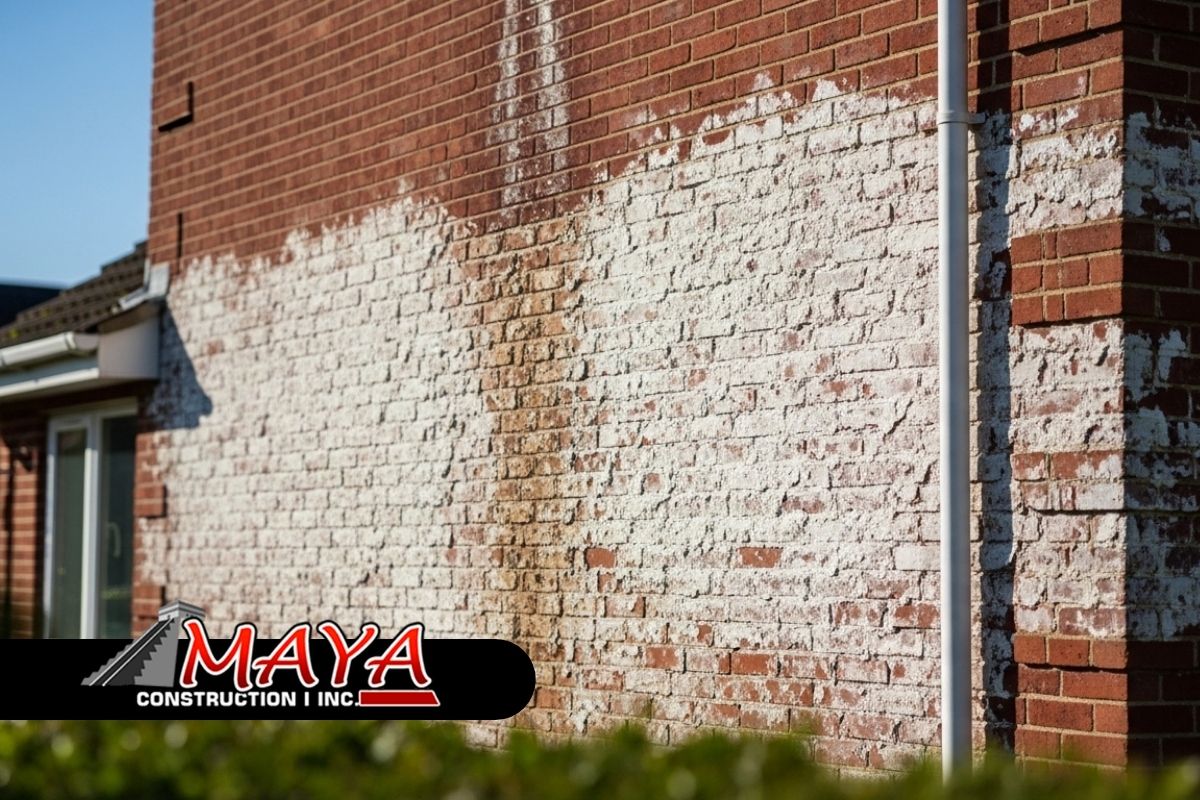
Efflorescence on brick walls can make a clean surface look dull and uncared for. At Maya Construction 1 Inc, we know this white residue is more than a surface issue because it often points to hidden moisture that needs attention.
When water moves through brick and mortar, salts rise to the surface and dry there. As a result, your wall may lose its natural color, and small signs of damage can appear over time if the source of moisture stays untreated.
Understand Why White Deposits Form on Exterior Brick Surfaces
Efflorescence on brick walls appears when water carries natural salts through brick, mortar, or concrete. Once that water reaches the surface and dries, it leaves behind a chalky layer that many homeowners describe as white powder on brick.
This problem often shows up after rain, snow, or repeated damp conditions. Even so, the residue itself is only part of the story, since it usually means moisture is moving through the wall more often than it should.
Common Sources Behind Ongoing Brick Moisture Issues
Many brick moisture problems begin with poor drainage, broken gutters, or cracks around joints. In other cases, roof leaks, bad grading, and worn flashing allow water to enter the wall and stay trapped longer than expected.
Because of that, masonry water intrusion can come from both outside and inside the structure. Our team often recommends reading our masonry repair tips to spot early warning signs before stains spread further.
Visual Changes Caused by Salt Buildup on Brick
Salt deposits can cover the warm color of brick with a pale and dusty film. Over time, that change can lead to uneven brick staining, making the wall look older and less cared for than it really is.
Even a small patch can stand out and affect curb appeal. Therefore, early cleaning and moisture control matter if you want to protect both the appearance and lasting value of your masonry surfaces.
Smart Steps That Help Prevent Future Deposits
The best way to limit efflorescence on brick walls is to control water before it enters the masonry. Good drainage, solid flashing, sealed joints, and clear gutters all help reduce repeat moisture around the building.
In addition, breathable protection can help when used at the right time. You can also explore our masonry restoration techniques for ideas that support stronger and longer-lasting brickwork.
- Keep downspouts away from the foundation.
- Repair cracked mortar before water spreads.
- Check grading so water flows away from walls.
Safe Ways to Clean Brick Without Damage
If deposits are light, dry brushing is often the first step. A gentle rinse can follow, but strong pressure should be avoided because it may wear down mortar joints and push more water deeper into the wall.
Homeowners often ask about how to remove efflorescence from brick without causing harm. Usually, mild cleaning works best first, and our guide on repairing brick wall cracks explains why surface issues should never be ignored.
- Use a stiff nylon brush for dry residue.
- Test any cleaner on a small hidden area.
- Rinse well so no extra residue stays behind.
Simple Supplies That Make Cleaning More Effective
A careful cleaning job does not need many tools. Most homeowners can start with a brush, bucket, gloves, eye protection, and a garden hose with a soft spray setting for light surface washing.
For mild buildup, diluted vinegar or gentle soap may help loosen salts. However, if stains return quickly, Maya Construction 1 Inc recommends looking past the surface and checking for the moisture source first.
- Soft rinse hose for controlled washing.
- Protective gear for safer handling.
- Mild cleaner for small affected areas.
Frequently Asked Questions
Is efflorescence a sign of major wall failure?
Not always. Still, it does show that water is moving through the wall, so the cause should be found early to avoid bigger issues later.
Can white powder come back after cleaning?
Yes, it can return if the moisture source remains active. That is why cleaning alone is rarely enough for lasting results.
What causes white powder on brick to appear?
It forms when water dissolves salts inside masonry and carries them outward. After the water dries, the salts stay on the surface.
When should I call a masonry professional?
You should seek help when deposits keep coming back, stains spread fast, or the wall shows cracks, loose mortar, or surface flaking.
Can cleaning methods damage brick surfaces?
Yes, harsh acids or strong pressure can damage brick and joints. For that reason, safer methods should always come first.
Long-Term Care for Cleaner and Stronger Brickwork
Lasting care means checking the wall often, fixing small openings, and keeping water away from the structure. At Maya Construction 1 Inc, we believe steady maintenance protects beauty, lowers repair costs, and keeps masonry performing well through every season.
Efflorescence on brick walls is easier to manage when problems are found early. To compare materials and make better exterior choices, visit our page about brick and stone differences or contact us through our contact page.