
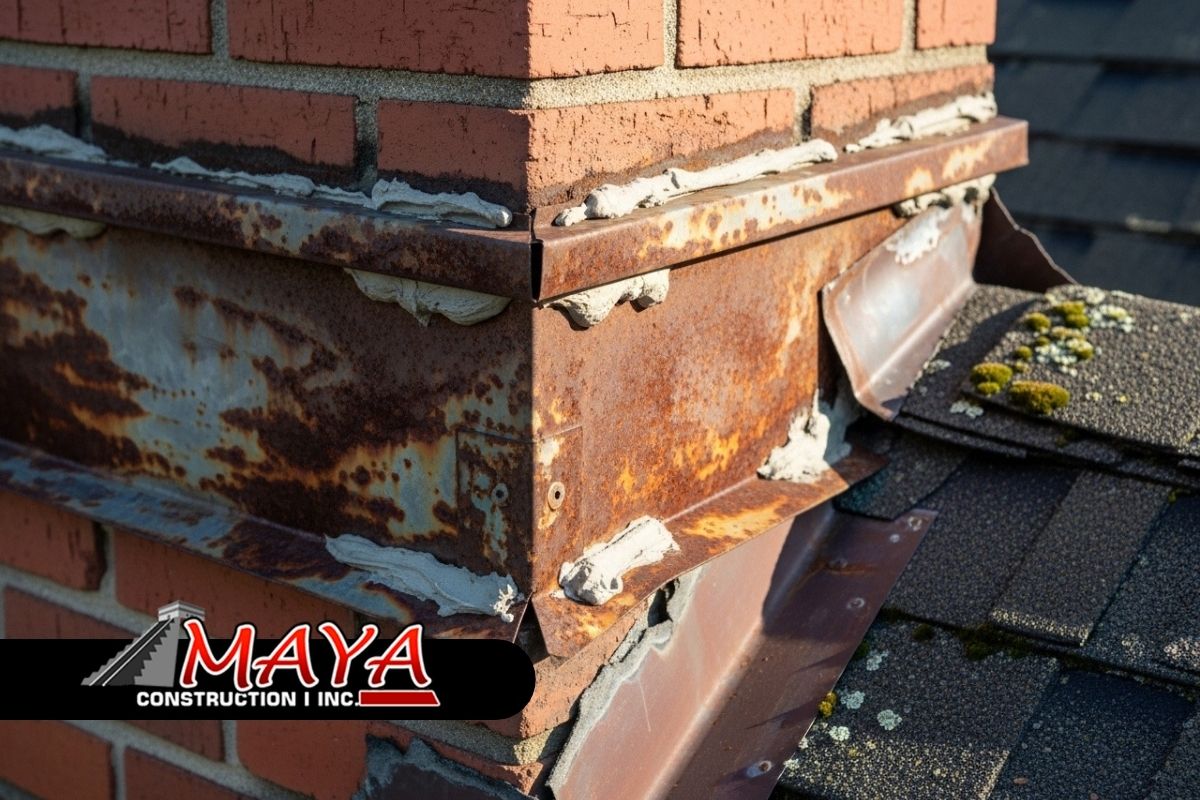
Chimney flashing repair signs can start small, yet they often point to water entering your roof. A damp ceiling spot, rusted metal, or water around chimney areas may seem minor at first. However, these signs can grow into costly repairs when they are ignored.
At Maya Construction 1 Inc, we help homeowners spot early warning signs before leaks spread. This guide explains simple ways to notice trouble, understand chimney leak signs, and choose the right next step for a safer, drier home.
Regular Chimney Care Keeps Small Leaks From Spreading
Regular care makes it easier to notice chimney flashing repair signs before they turn into larger roof problems. Flashing seals the space where the chimney meets the roof. When that seal opens, rain can move inside and damage wood, ceilings, and insulation.
Our team at Maya Construction 1 Inc checks flashing, mortar, and chimney caps during restoration work. For more details about local chimney care, you can review our Dutchess County chimney restoration services.
Early Warning Signs Around Your Chimney And Roof
Many chimney flashing repair signs are easy to miss because they look small at first. Still, a stain, loose metal edge, or cracked seal can show that water is entering the roof line. These problems often lead to roof flashing damage when left alone.
- Rust or bending on the metal flashing near the chimney
- Cracked sealant where the flashing touches brick or shingles
- Peeling paint or damp marks on nearby walls
- Shingles that look lifted, curled, or loose near the chimney
Water Stains And Damp Areas Need Fast Attention
Water around chimney areas is one of the clearest signs of a flashing problem. You may notice wet insulation, dark roof decking, or a small puddle after rain. These marks usually mean water is passing through a weak seal.
When homeowners contact Maya Construction 1 Inc, we explain where leaks may be starting and why fast action matters. If winter weather has made the issue worse, our winter chimney checklist can help you know what to watch.
Damaged Flashing Materials Can Lead To Hidden Leaks
Metal flashing can wear down after years of rain, wind, sun, and temperature changes. Once it rusts, bends, or separates, water can slip behind it. That can create chimney leak signs inside the home long before the roof looks damaged outside.
- Rust spots along the flashing edges
- Loose sections that move when touched
- Open gaps between brick and roofing materials
- Old caulk that looks dry, split, or missing
Mold Near The Chimney Points To Moisture Trouble
Mold or mildew near a chimney often means moisture is trapped inside the wall or attic. These stains may appear black, green, or brown. Since mold grows in damp areas, it can point to chimney waterproofing issues that need quick attention.
Cleaning mold without fixing the leak only hides the problem for a short time. The safer step is to stop the water source, then repair the damaged seal. Our freeze-thaw masonry repair guide explains how weather can make masonry damage worse.
Safe Repair Choices For Longer Chimney Protection Results
Some small gaps can be sealed for short-term protection, but larger damage needs a full repair. Flashing replacement signs include loose metal, deep rust, repeated leaks, and wide openings near the chimney base. These signs should not be covered with quick patches only.
- Use proper sealant only for small surface cracks
- Remove debris from the chimney and roof joint
- Schedule an inspection when leaks return after rain
- Choose full replacement when flashing is loose or rusted
Frequently Asked Questions
What are the most common chimney flashing repair signs?
The most common chimney flashing repair signs include ceiling stains, rusted flashing, cracked sealant, damp attic areas, and water marks near the fireplace. These signs usually mean water is moving through a weak roof joint.
Can a small chimney leak become serious?
Yes, a small leak can damage roof wood, insulation, drywall, and masonry over time. Water can also lead to mold growth when damp areas stay hidden for too long.
Should I repair chimney flashing myself?
Small caulking work may help for a short time, but full flashing repair is safer with trained help. Roof work can be risky, and poor sealing can allow leaks to return.
How often should my chimney flashing be checked?
Your chimney flashing should be checked at least once a year. It should also be inspected after heavy storms, strong wind, ice, or signs of indoor water stains.
What should I do when I see water stains?
Check the area near your chimney, then schedule a professional inspection. You can also use our contact page to ask for guidance before the damage spreads.
Protect Your Home With Timely Chimney Maintenance Today
Chimney flashing repair signs should never be ignored because they often warn you before major damage begins. With Maya Construction 1 Inc, you get clear guidance, careful inspection, and repair options that fit the condition of your chimney and roof.
For nearby service information, visit our Westchester County chimney restoration page or our Orange County chimney restoration page. Acting early helps protect your home from leaks, mold, and costly repairs.