
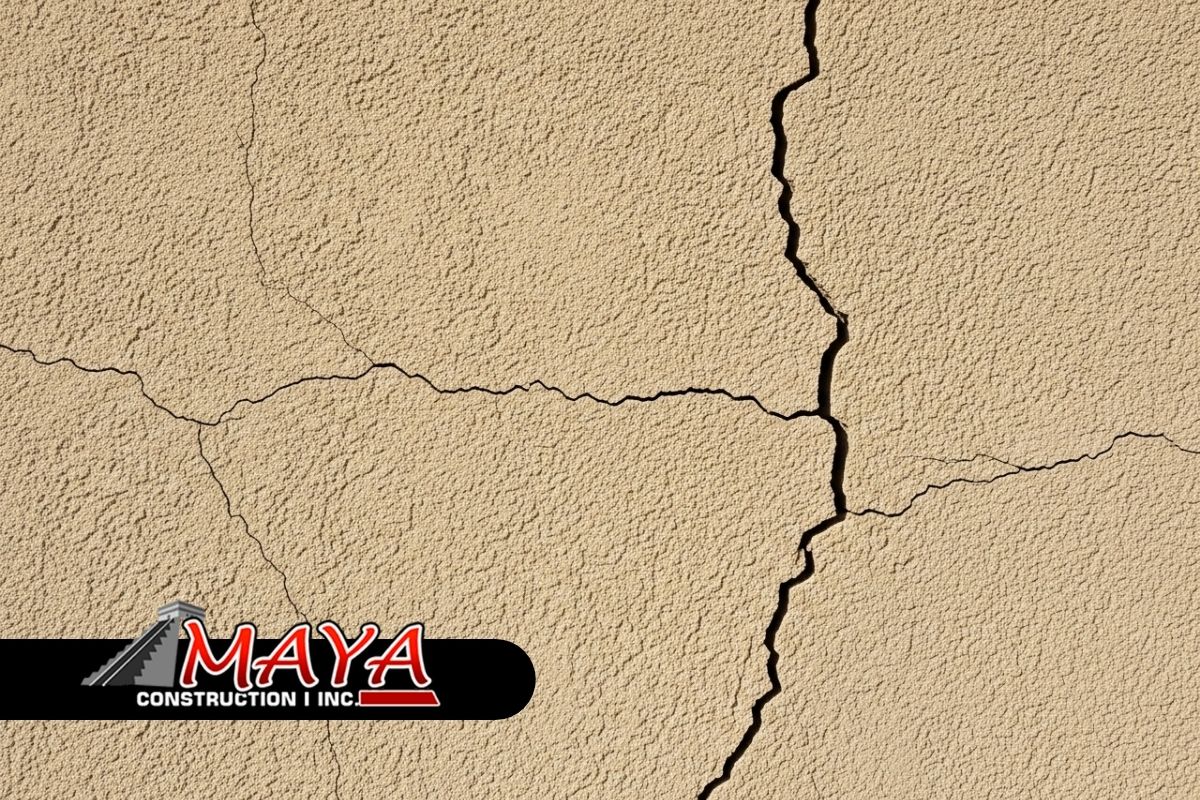
Understanding stucco hairline cracks vs structural cracks helps you protect your home without stress. Some marks are small surface flaws, while others may point to deeper wall movement. Therefore, knowing the difference can save worry, time, and the cost of the wrong repair.
At Maya Construction 1 Inc, we explain crack signs in clear words before any work begins. This guide shows the main stucco crack types, when stucco cracks matter, and how a careful stucco crack inspection can support safer decisions.
Small Surface Lines And What They Usually Mean
Hairline cracks are thin marks on the stucco surface. They often look like pencil lines and are usually less than 1/16 inch wide. In many homes, they appear near windows, doors, corners, or areas where two materials meet.
These marks are often cosmetic stucco cracks, not signs of deep wall damage. However, they still deserve attention because sealing them early keeps dirt and moisture away. For more common warning signs, read our guide to common stucco problems.
Common Clues Behind Cosmetic Stucco Crack Patterns Today
Many small cracks happen because stucco moves slightly with heat, cold, and normal settling. As the surface expands and shrinks, fine lines can form. Also, fast drying or a thin stucco layer may leave light cracks after installation.
- Thin lines that stay the same width over time
- Cracks near window frames, doors, or panel joints
- No stains, bulging, soft spots, or wall movement
How stucco hairline cracks vs structural cracks differ
The biggest difference is depth, width, and change over time. Hairline cracks stay narrow and stable. Structural wall cracks are usually wider, uneven, or growing. Because of this, stucco hairline cracks vs structural cracks should never be judged by looks alone.
With Maya Construction 1 Inc, we look at the full wall condition, not just one line. A proper review checks moisture, wall movement, nearby openings, and past repair work. This makes the next step clearer and safer.
Warning Signs That Point To Deeper Wall Trouble
Structural cracks may show stair-step patterns, jagged edges, or open gaps. They may also run from corners of windows or doors. In addition, doors may stick, trim may shift, or stucco may pull away from the wall.
Water stains, mold, soft areas, or bulging stucco can mean moisture has moved behind the surface. When these signs appear, a stucco crack inspection is important. The issue may involve framing, drainage, foundation movement, or poor installation.
Simple Repair Steps For Minor Stucco Surface Lines
Small surface cracks can often be cleaned, sealed, and blended with the surrounding finish. First, remove loose dust and debris. Then, use the right patching material for stucco. For a deeper repair overview, visit our page on how stucco repair works.
- Clean the crack with a brush before sealing
- Use a quality acrylic caulk or stucco patch
- Blend texture and color after the repair cures
Smart Color Matching After Stucco Crack Repairs
A clean repair should protect the wall and look natural. However, matching older stucco can be hard because sun, rain, and age change the color. Therefore, testing a small area helps the finish blend better.
Our team at Maya Construction 1 Inc takes color and texture seriously during repair planning. You can also review our tips for matching stucco colors before choosing a finish.
Frequently Asked Questions
Are all stucco cracks a serious problem?
No, many cracks are only surface marks. Still, they should be watched and sealed when needed. This helps stop moisture from entering and keeps the wall looking clean.
When should I worry about a stucco crack?
You should worry when a crack gets wider, leaks water, bulges, or appears near a shifting door or window. These signs can show when stucco cracks matter and need professional review.
Can hairline cracks turn into bigger cracks later?
Yes, they can if water enters or if the wall keeps moving. Regular checks help you catch changes early before a small flaw becomes a larger repair.
How often should stucco be inspected?
Most homes should be checked at least once a year. It is also smart to inspect after strong storms, heavy rain, or visible wall movement.
Can I repair small stucco cracks myself?
Some small cracks can be sealed with the right products. However, wider or moving cracks need expert review. This is especially true when comparing stucco hairline cracks vs structural cracks.
Maintenance Habits That Keep Stucco Walls Healthy Longer
Good care helps prevent new cracks and slows damage from weather. Keep gutters working, guide water away from walls, and trim plants that hold moisture against stucco. For more guidance, visit our stucco maintenance tips.
- Check walls after storms and seasonal changes
- Seal small cracks before dirt or water collects
- Contact a local stucco team for larger concerns
When customers contact Maya Construction 1 Inc, we help them understand stucco hairline cracks vs structural cracks with clear, honest guidance. To discuss your wall concerns, use our contact page and share what you are seeing.