
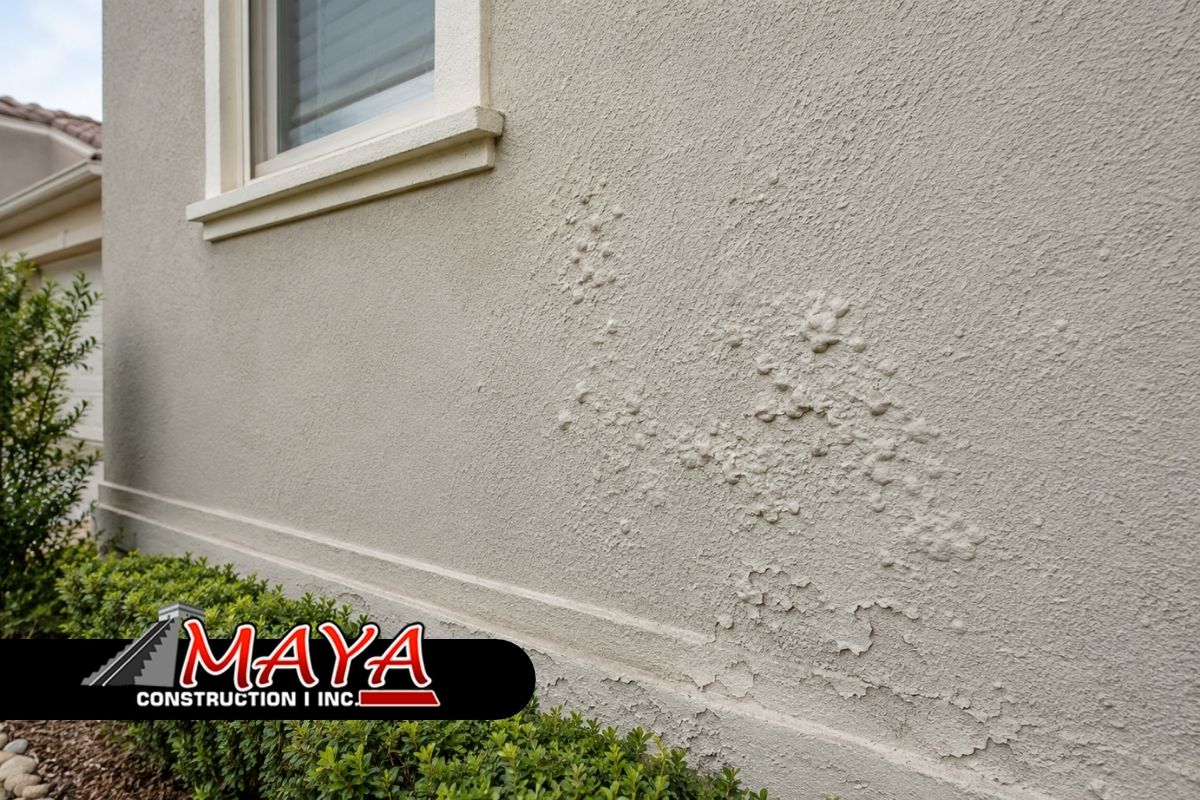
Stucco bubbling and blistering causes can confuse many homeowners because the wall may look fine one day and raised the next. However, these surface changes often point to moisture, weak bonding, or poor wall care.
At Maya Construction 1 Inc, we help property owners look beyond the surface. A bubbling stucco wall is not always just a paint problem, so the right repair starts with finding what made the finish lift.
Stucco Bubbles Form On Exterior Wall Surfaces
A bubble usually forms when the stucco layer separates from the wall behind it. As a result, small raised spots may appear and later crack, peel, or open.
In many cases, a blistered stucco finish shows that air, water, or weak bonding has broken the surface grip. Therefore, painting over it may hide the problem for a short time, but it will not solve the cause.
Common Moisture Problems Behind Stucco Surface Damage
Trapped moisture in stucco is one of the most common reasons for raised patches. Water can enter through small cracks, open joints, bad flashing, or clogged gutters.
- Water collecting near windows, doors, or rooflines
- Soil or plants holding moisture against the wall
- Missing or blocked drainage points near the base
When water has no easy way out, pressure builds behind the finish. For more details, our guide on common stucco problems explains how small wall changes can lead to larger repair needs.
Poor Installation Choices That Weaken Stucco Over Time
Some stucco bubbling and blistering causes begin during the first installation. If the crew did not clean, prepare, mix, or cure the wall correctly, the finish may not bond well.
Also, stucco needs the right layers and enough drying time. When crews rush these steps, the surface can become weak and more likely to crack, lift, or separate during weather changes.
Warning Signs Your Stucco May Be Delaminating
Stucco delamination signs often appear as hollow sounds, soft areas, cracks, or raised sections. These signs mean the stucco may be pulling away from the wall behind it.
- Hollow sound when someone gently taps the wall
- Soft or springy areas under light hand pressure
- Cracks around bubbles, corners, or patched areas
Our team at Maya Construction 1 Inc checks these warning signs before suggesting repair steps. In addition, our page about proper stucco repair steps shows why the cause should be addressed first.
When Small Blisters Need Careful Stucco Repair
Knowing when to repair stucco can protect the wall from deeper damage. Small blisters may seem minor, but they can allow more water to enter if they crack open.
Therefore, repairs should happen when bubbles spread, paint peels, hollow sounds appear, or moisture returns after dry weather. Early care can help avoid large wall sections needing replacement later.
Simple Maintenance Habits That Help Protect Stucco
Good wall care can lower the risk of stucco bubbling and blistering causes returning. Clean gutters, sealed joints, and proper drainage all help keep water away from the stucco surface.
- Rinse walls gently to remove dirt and buildup
- Seal small cracks before water enters them
- Keep sprinklers from spraying directly on walls
With Maya Construction 1 Inc, homeowners get clear guidance before small concerns grow. You can also review our stucco maintenance practices for simple ways to support longer-lasting walls.
Frequently Asked Questions
What causes a bubbling stucco wall?
A bubbling stucco wall often comes from moisture, weak bonding, poor installation, or trapped air. However, the exact cause depends on where the bubble appears and how the wall was built.
Can I paint over a blistered stucco finish?
Painting over a blistered stucco finish is not the best first step. A professional should check, dry, and repair the area before adding paint, or the blister may return.
How do I know if moisture is trapped?
Trapped moisture in stucco may cause stains, soft spots, peeling paint, musty smells, or repeated bubbles. A professional inspection can confirm whether hidden dampness is present.
Are stucco bubbles always a serious problem?
Not always, but homeowners should not ignore them. Some bubbles are small surface issues, while others point to deeper wall separation or water damage.
Can stucco go over brick safely?
Stucco can go over brick in some cases, but the surface needs proper checking and preparation. Our article about applying stucco over brick explains what matters before starting.
Get Trusted Help Before Stucco Damage Spreads
Stucco bubbling and blistering causes are easier to manage when homeowners find them early. A careful inspection can show whether the issue is moisture, weak bonding, poor drainage, or surface damage.
When customers contact Maya Construction 1 Inc, we explain the safest next step in simple terms. For local support, visit our stucco contractor services or send a message through our contact page.