
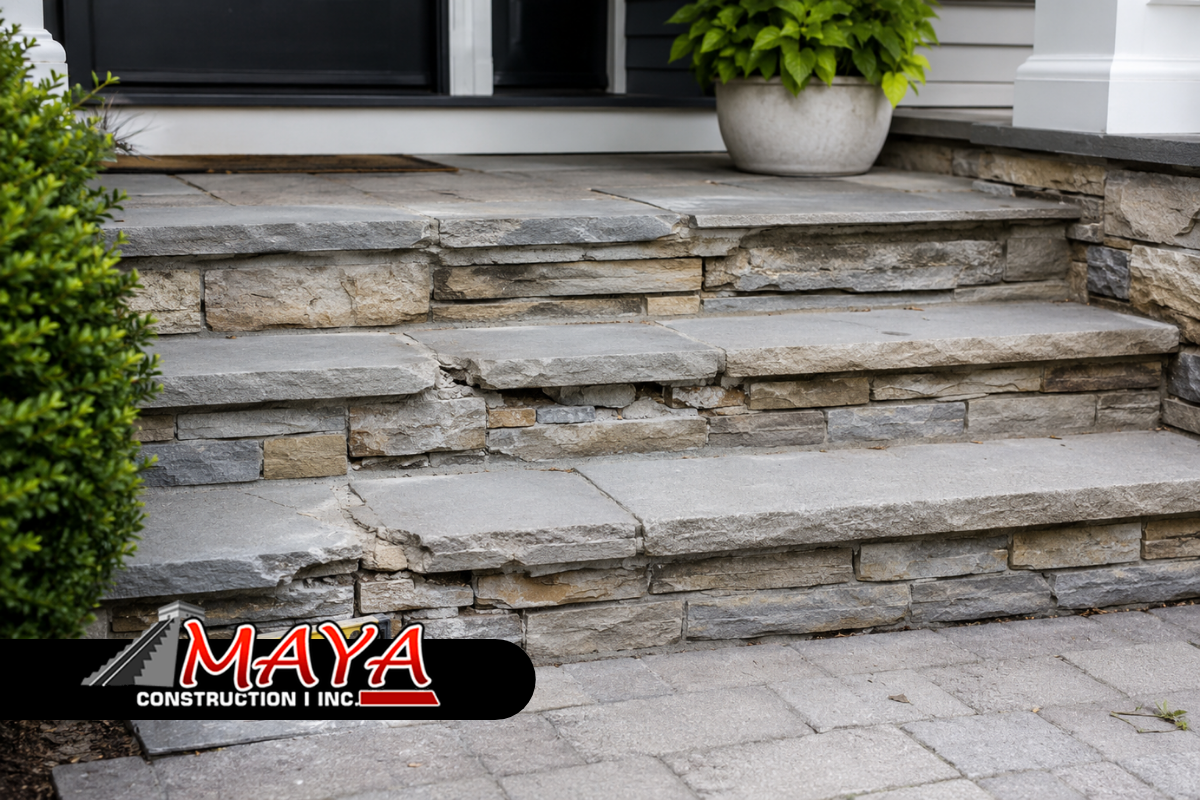
Stone steps add beauty, strength, and character to an entryway. However, daily use, rain, ice, and shifting soil can slowly weaken them. Knowing common stone step repair signs helps you act before small problems become serious safety concerns.
At Maya Construction 1 Inc, we encourage early checks because small changes are easy to miss. A narrow crack, loose edge, or slight drop may seem minor. Over time, these issues can affect the look and stability of your steps.
Regular Inspections Protect Your Stone Steps From Damage
Seasonal checks make changes easier to notice. Look at your steps after heavy rain, freezing weather, or long dry periods. These conditions can reveal movement, open joints, or new surface damage.
Keep photos of any stone step repair signs you find. Compare the same area every few months. This habit shows whether a crack is spreading, a joint is opening, or one tread is slowly sinking.
- Check every tread, edge, and joint closely.
- Look for movement after storms or freezing weather.
- Note changes in height or surface level.
Cracks And Chips Often Signal Deeper Step Problems
Cracked stone steps may begin with thin lines that look harmless. Still, water can enter and expand during cold weather. As a result, the crack may widen and weaken the nearby stone.
Small chips also deserve attention, especially near corners and front edges. These areas carry repeated foot pressure. Our guide to effective masonry restoration methods explains how careful work can protect original stone and reduce further wear.
Loose Edges Create Safety Risks Around Entry Areas
Loose stone step edges can shift underfoot. This movement may cause trips, falls, or more damage to nearby mortar. Even slight motion warns that the bond below the stone may be failing.
With Maya Construction 1 Inc, you receive clear guidance about the safest next step. We inspect the loose area, nearby joints, and the base. This review helps us find the cause instead of treating only the surface.
- Test edges gently for movement.
- Watch for broken mortar nearby.
- Limit use when an edge feels unstable.
Uneven Stairs May Point To Ground Movement Below
Uneven stone stairs often develop when soil moves, drains poorly, or loses support. One tread may sit higher or lower than the next. This creates an unsafe surface and may let water collect.
Stone step settling can happen slowly, so it is easy to overlook. Compare each tread from the side and front. Our completed stonework gallery shows how level, well-supported steps should look.
Water Stains Reveal Moisture Problems Near Stone Steps
Dark marks, white deposits, and damp joints show that water may be staying too long. Moisture can weaken mortar, stain stone, and increase freeze damage. Therefore, drainage should be part of every inspection.
Check where roof runoff, sprinklers, or sloped soil send water. Damaged entry steps near these areas may need more than cleaning. Our article about protecting older stonework also shows why moisture control matters.
- Look for dark patches after dry weather.
- Check joints for soft or missing mortar.
- Keep drains and nearby channels clear.
Professional Repairs Restore Strength And Lasting Visual Appeal
Some stone step repair signs need professional care. Large cracks, repeated movement, deep gaps, or several sinking treads often point to a weak base. Surface patching may not hold when support below has failed.
At Maya Construction 1 Inc, we review the full stair system before recommending work. Repairs may include resetting stones, rebuilding support, or replacing mortar. Learn more about renewing exterior stone features through careful restoration.
Frequently Asked Questions
How often should stone steps be inspected?
Inspect them at least twice each year. Also check after hard freezes, heavy rain, or nearby ground work. Regular reviews make early stone step repair signs easier to spot before damage becomes severe.
Can small cracks become serious over time?
Yes. Water can enter small cracks, freeze, and push the stone apart. A narrow line may become a wide break, especially with weak mortar or poor drainage.
Why do stone step edges become loose?
Loose edges often come from failed mortar, water damage, repeated impact, or base movement. The stone should be checked before it shifts farther or affects nearby pieces.
What causes stone steps to sink unevenly?
Poor soil support, erosion, trapped water, and base failure can cause stone step settling. A proper repair may require lifting the stone and rebuilding the layer below.
When should damaged steps be professionally repaired?
Professional help is best when steps move, slope, crack deeply, or fail after small repairs. Our team can inspect the cause and explain a lasting solution.
Protect Your Stone Steps With Timely Expert Care
Early action keeps cracked stone steps, loose sections, and uneven surfaces from becoming larger hazards. Sweep debris, manage water, and watch for change. These habits support safety and appearance.
When stone step repair signs continue, contact Maya Construction 1 Inc through our stone step consultation page. We will review the condition, explain practical options, and help protect your entryway with care suited to your home.