
Brick wall installation can feel easier when each step is clear and planned. With the right tools, safe work habits, and steady pacing, you can build a wall that looks neat and stays strong from day one.
At Maya Construction 1 Inc, we know that careful setup matters before the first brick is placed. Good brick wall planning also reduces mistakes and helps every course stay straight from start to finish.
Choose Tools and Masonry Materials Before Starting Work
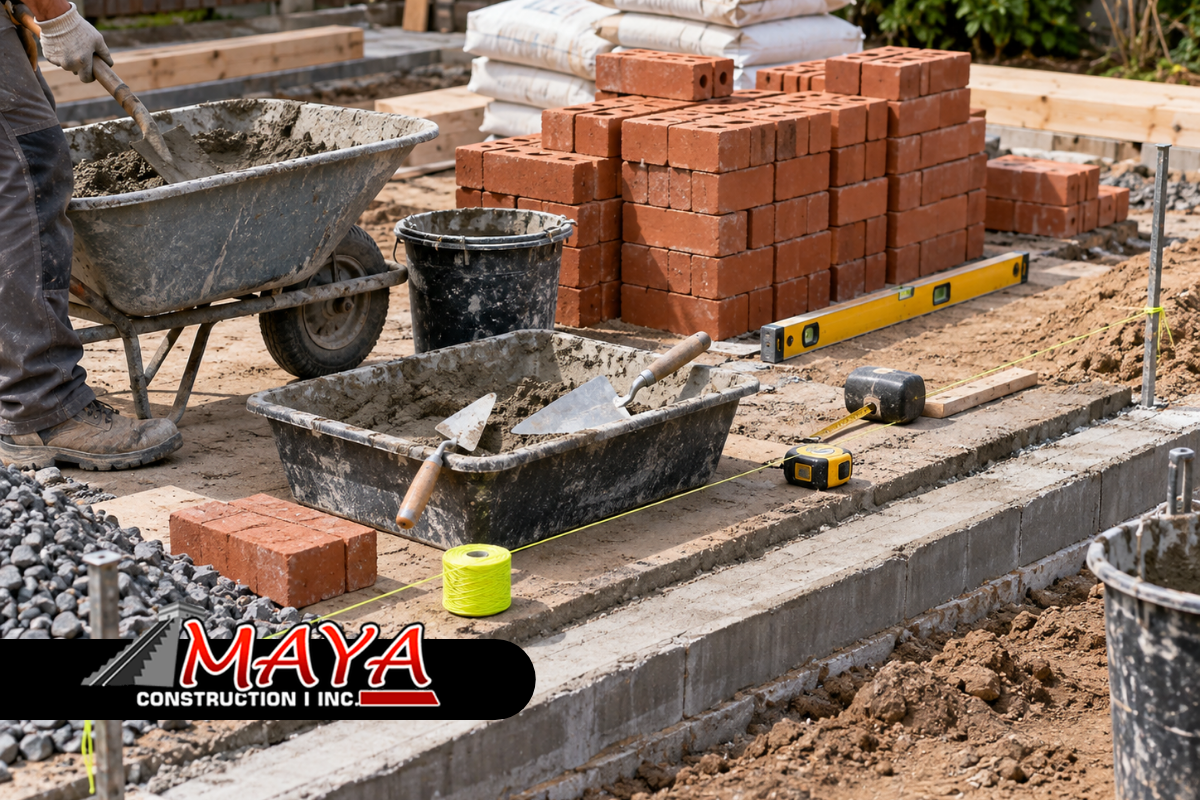
Before building, gather the tools and masonry materials you need. A brick trowel, spirit level, jointer, brick hammer, tape measure, mixing tub, gloves, and safety glasses can make the work smoother and safer.
- Keep extra bricks ready in case some break.
- Have enough mortar for the full work period.
- Place tools nearby without blocking your walking area.
For more help with material choices, read our guide to choosing masonry materials before you begin.
Prepare the Site for Safe Brick Wall Construction
A stable work area is important for brick wall construction. Clear weeds, loose soil, and debris from the area. Then check that the ground is firm and level before marking the wall line.
Use stakes and string to show the wall position. If the ground is uneven, prepare a suitable base before moving forward. This step supports better alignment during brick wall installation and lowers the chance of movement later.
Plan Brick Patterns and Set Accurate Wall Lines
Brick patterns affect both appearance and strength. Running bond is common because each row overlaps the one below. Stack bond has a cleaner look, while Flemish bond creates a more detailed pattern.
- Pick the pattern before mixing mortar.
- Mark corners and endpoints with clear lines.
- Check measurements twice before placing bricks.
Our team at Maya Construction 1 Inc recommends simple brick wall planning when working on a first project. You can also review our brick masonry information for useful project context.
Mix Mortar Carefully for Strong and Even Joints
Mortar should be smooth enough to spread but firm enough to stay on the trowel. Add water slowly and mix in small batches. Too much water can weaken the mix, while too little makes it difficult to use.
Keep unused mortar covered during short breaks. Stir it again before continuing. Consistent mortar supports cleaner joints and helps each brick stay secure during brick wall installation.
Lay First Courses With Level and Steady Alignment
The first course sets the direction for the whole wall. Spread an even mortar bed, place the first brick, and tap it gently into position. Use a level and string line to check height and alignment.
- Set the first brick at one end.
- Add mortar to the end of the next brick.
- Check the line after every few bricks.
- Remove extra mortar before it hardens.
As the wall grows, stagger the joints for better support. This basic method keeps brick wall construction steady and gives the finished surface a more balanced look.
Build Height Safely While Keeping Brick Courses Straight
Continue adding rows with the same careful process. Check both horizontal level and vertical alignment often. Small errors can become larger as the wall gets taller, so correct them early.
Cut bricks only when needed for corners or tight spaces. Wear eye protection and gloves while cutting. At Maya Construction 1 Inc, we also encourage homeowners to review the benefits of professional masonry work when a project involves complex support or structural concerns.
Frequently Asked Questions
How long should mortar cure before sealing?
Mortar usually needs time to harden before any sealer is added. Follow the mortar maker’s instructions and avoid sealing too early, since trapped moisture can affect the finish.
Can beginners handle brick wall installation safely?
Small, simple projects may be manageable with careful preparation. However, taller walls, retaining walls, and walls tied to buildings may require professional help and local code review.
Why do brick walls need expansion joints?
Expansion joints allow small movements caused by temperature changes. They can help reduce cracking when placed correctly in longer walls or near changes in wall height.
What should I check during each course?
Check level, joint width, spacing, and vertical alignment. Frequent checks make it easier to correct small problems before they affect the whole wall.
Where can I compare common masonry material types?
You can review our overview of masonry material types to compare common options and understand where each one may fit.
Finish Joints and Protect Your New Brick Wall
When the mortar is firm but still workable, shape the joints with a jointer. Clean away loose mortar with a soft brush, and avoid using too much water on fresh work.
At Maya Construction 1 Inc, you can also get guidance when your project needs experienced support. For questions about brick wall installation, use our contact pagefor masonry guidance and tell us about your wall, site, and goals.