
Brick arches add character and support to many homes. However, age, moisture, and movement can cause problems over time. At Maya Construction 1 Inc, we approach brick arch repair with care because small defects can affect appearance and stability.
Early attention can prevent larger problems. A cracked brick arch, loose arch bricks, or mortar deterioration may start small, but each issue can grow. This guide explains how to check damage, plan repairs, and protect the finished arch.
Spot Early Signs of Damage Before Problems Spread
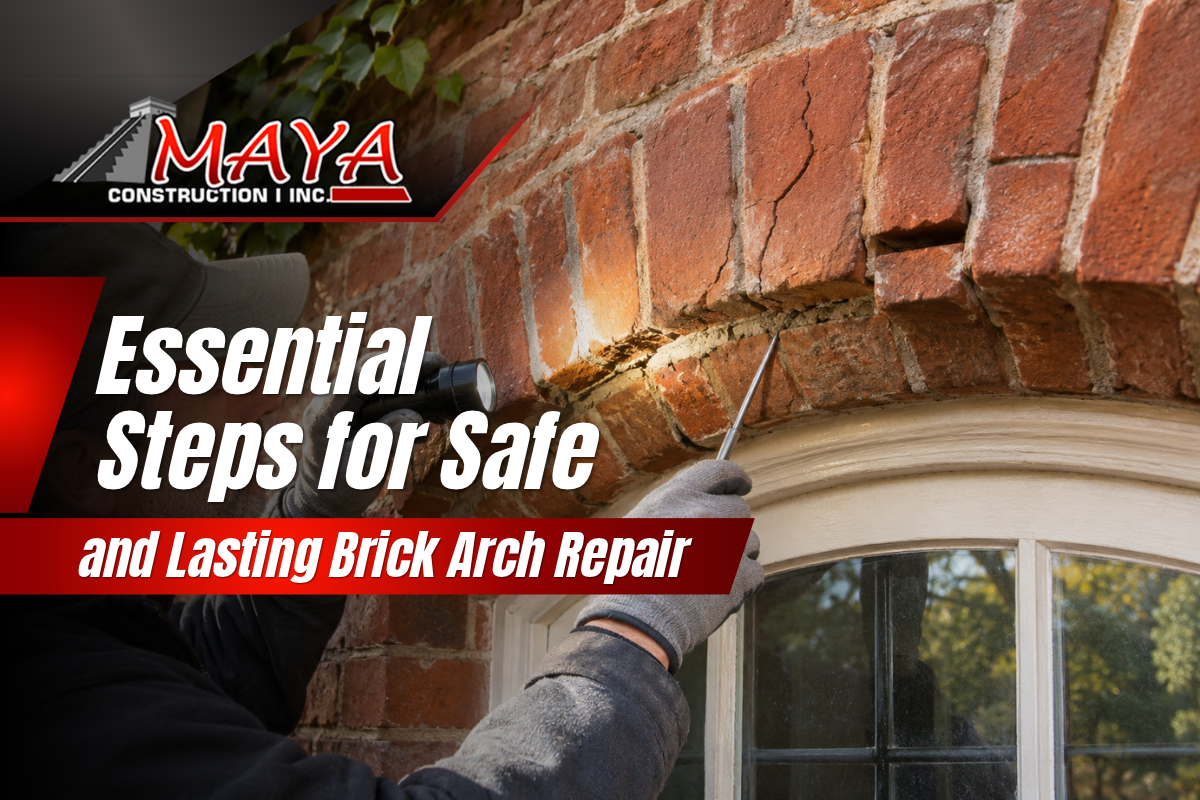
Check the full arch carefully. Look for cracks, open joints, missing mortar, and bricks that seem out of line. Water stains can show where moisture has weakened the area.
At Maya Construction 1 Inc, we recommend noting each sign of brick arch damage before work begins. This helps identify areas needing simple repairs or deeper attention. For related wall issues, our brick wall crack guide explains how visible cracks can develop.
- Check for visible cracks along the arch curve.
- Look for gaps between bricks and mortar joints.
- Test loose bricks gently without forcing movement.
- Notice stains, damp areas, or crumbling mortar.
Choose Proper Tools and Materials for Better Results
Good materials support a longer repair. Basic tools include a trowel, pointing tool, chisel, hammer, brush, gloves, and eye protection. Matching bricks also keep the arch looking natural.
For brick arch repair, mortar should suit the existing masonry. It should bond well without being too hard for older brick. Our brick masonry services page also explains common brickwork needs and repair options.
Prepare the Work Area With Safety in Mind
Before starting, clear the area around the arch. Remove furniture, decorations, and anything blocking safe movement. Stable ladders or platforms are important when the repair area is high.
Wear gloves, eye protection, and a dust mask when removing old mortar. Also, avoid pulling out several bricks at once. Careful work helps reduce unwanted movement during repair.
Repair Cracked Bricks Without Changing the Arch Shape
A cracked brick arch may need one brick replaced rather than a full rebuild. First, remove loose mortar. Then, take out the damaged piece carefully and clean the opening.
Apply fresh mortar and place the replacement brick in line with the existing curve. For reliable brick arch repair, joint depth and brick position should match nearby areas. Our masonry repair tips provide more guidance for handling small repair areas.
- Remove weak mortar around the damaged brick.
- Clean the opening and dampen it lightly.
- Set the brick into a fresh mortar bed.
- Shape the joints to match nearby masonry.
Secure Loose Bricks and Restore Strong Mortar Joints
Loose arch bricks often appear when old mortar loses its grip. Remove weak material around each affected brick, but avoid damaging surrounding units. Clean both the brick and opening before adding new mortar.
Mortar deterioration should also be removed from nearby joints. Press fresh mortar into the cleaned spaces and shape each joint evenly. At Maya Construction 1 Inc, we focus on keeping the repair stable while preserving the original look.
Blend Repaired Areas for a Clean Finished Appearance
After the mortar begins to set, remove residue with a soft brush. Avoid strong water pressure because it can damage fresh joints. Small touch-ups can improve uneven lines.
Color differences may fade as mortar cures. Therefore, allow enough drying time before judging the final appearance. A careful finish makes brick arch repair less noticeable. Our masonry restoration techniques page shares more ways to protect repaired masonry.
Frequently Asked Questions
How do I know if an arch needs repair?
Visible cracks, loose bricks, missing mortar, or repeated moisture stains can signal a problem. If the arch shape looks uneven, professional review is a safer choice.
Can small cracks be repaired without replacing bricks?
Yes, some small cracks can be repaired by renewing the surrounding mortar. However, damaged bricks may still need replacement if the crack affects strength.
What causes mortar to weaken around brick arches?
Water, age, freeze-thaw cycles, and building movement can slowly weaken mortar joints and create gaps.
Should I seal a repaired brick arch?
A breathable masonry sealer may help. The surface must still allow moisture to escape, so product choice matters.
When should I call a masonry professional?
Call a professional when bricks move, cracks keep growing, or the arch appears to sag. These signs may point to deeper brick arch damage.
Protect Your Repaired Arch With Simple Routine Care
Regular care can help reduce new damage. Check the arch after heavy rain, winter weather, or visible wall movement. Keep nearby gutters working well so water does not flow across the brick surface.
At Maya Construction 1 Inc, we recommend gentle cleaning and early repair of small mortar gaps. If you need help deciding the next step, connect with us for support with brick arch repair and related masonry concerns. Regular brick arch repair checks can also help catch new issues early.
- Inspect mortar joints once or twice each year.
- Keep water away from the arch when possible.
- Address small gaps before they become larger.
- Use gentle cleaning methods on brick surfaces.