
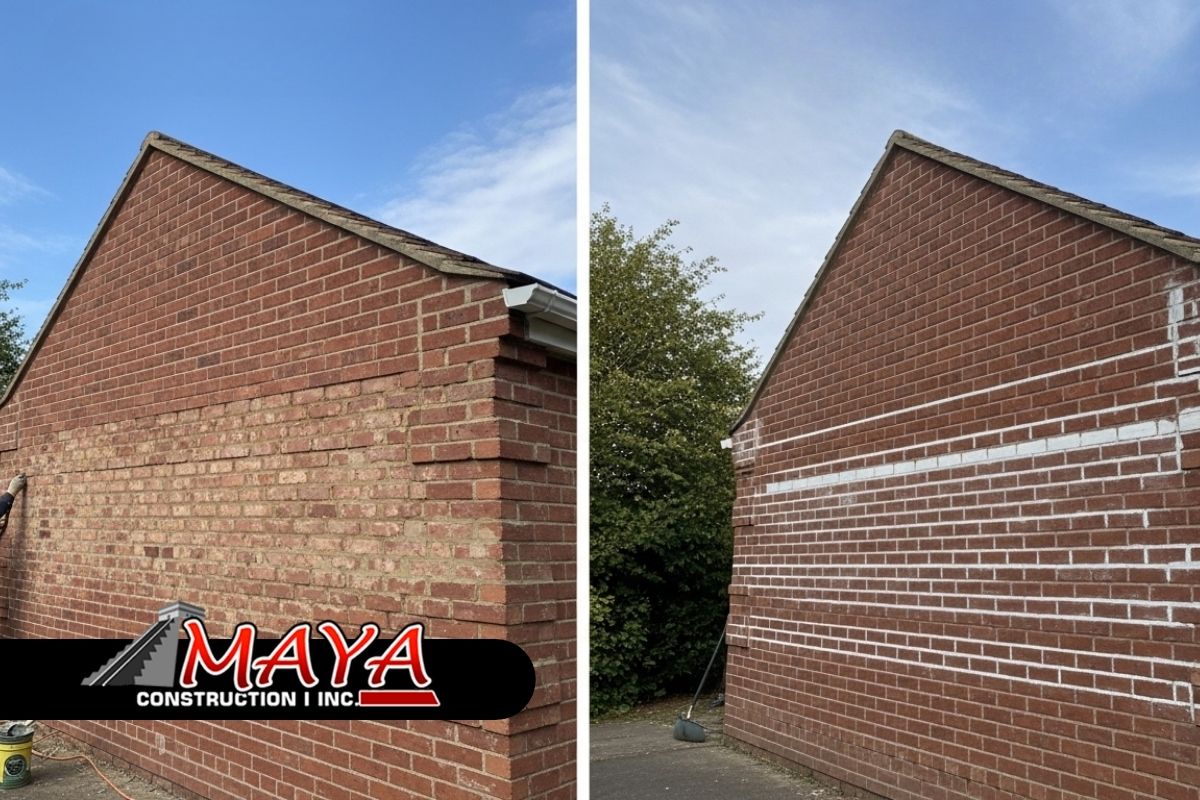
Repointing vs tuckpointing brick walls can seem like the same repair, yet each method serves a different goal. At Maya Construction 1 Inc, we help homeowners protect brick exteriors before small joint problems turn into major wall damage.
Although both methods improve masonry, one focuses more on strength while the other also improves appearance. As a result, knowing the difference helps you choose the right repair for your home, budget, and long-term peace of mind.
Why mortar joints fail as years pass
Mortar does not last forever. Rain, freezing weather, heat, and normal aging slowly wear joints down. Over time, damaged mortar joints let water move into the wall, which can lead to cracks, stains, and loose bricks.
Even so, early care can stop wider damage. Our team often sees walls that only need timely mortar joint repair, not a full rebuild, because the warning signs were handled before the problem spread.
Clear signs your brick wall needs attention
Many walls show visible clues before serious failure begins. Therefore, it helps to check joints often, especially after wet or cold seasons.
- Crumbling or missing mortar between bricks
- Dark stains, moss, or white powder on joints
- Small gaps that let water or drafts inside
When these signs appear, brick joint restoration may be the safest next step. You can also read our masonry repair tips for homeowners for more simple guidance.
How repointing restores strength and stops moisture
Repointing removes weak mortar and replaces it with fresh material that matches the wall. Because of this, bricks stay supported and the wall can resist moisture much better. It is often the best choice when appearance is not the only concern.
If you wonder when to repoint brick, look at the joint depth and condition. Loose, recessed, or cracked joints usually mean the wall needs attention soon before moisture reaches deeper areas.
What tuckpointing changes on older brick surfaces
Tuckpointing also repairs joints, but it adds a fine line that creates a cleaner and sharper look. For that reason, many owners choose it when they want a more polished finish on older or highly visible brick walls.
Still, the process takes more detail and care. The added design work can improve curb appeal, especially on facades where neat joint lines make the whole wall look more even and refined.
Key differences homeowners should review before deciding
Repointing vs tuckpointing brick walls matters because each option solves a different problem. One is usually more direct, while the other adds a visual upgrade.
- Repointing focuses on replacing worn mortar
- Tuckpointing repairs joints and improves appearance
- Project time and finish details are often different
For walls with surface cracks, our guide on how to repair brick wall cracks explains related damage that may appear with aging joints.
Cost and value factors that shape decisions
Tuckpointing vs repointing cost often depends on wall size, joint depth, access, and finish detail. In many cases, repointing costs less because it uses a simpler process with fewer decorative steps.
- Wall height can raise labor needs
- Historic finishes may need extra care
- Large areas usually increase material use
Even then, the best value is not always the lowest quote. Our team recommend choosing a repair plan that fits the wall condition first, then the visual goals of the property.
Frequently Asked Questions
What is the main difference between these services?
Repointing vs tuckpointing brick walls differs in purpose. Repointing mainly restores failing joints, while tuckpointing repairs joints and creates a more defined finished look.
How do I know if my wall has damaged mortar joints?
You may see missing mortar, sandy joints, small gaps, or moisture marks. These are common signs that repairs should not wait.
Does every old wall need full brick joint restoration?
No. Some walls only need local repairs. A close inspection helps show whether a small area or a larger section needs work.
Where can I learn more about repair options?
You can review our best masonry restoration techniques and our masonry services in Dutchess County to compare common solutions.
Should I hire a local masonry team?
Yes, especially for older walls. Maya Construction 1 Inc can inspect the joints, explain the next step clearly, and guide you through practical repair choices.
Choosing the right repair plan for longevity
Repointing vs tuckpointing brick walls should be chosen by looking at joint damage, water exposure, and the finish you want. In some homes, a simple repair is enough. In others, a cleaner visual result makes more sense.
At Maya Construction 1 Inc, we believe good masonry work should protect your home and keep its character. To discuss your wall, visit our contact page to speak with our team or learn more about our masonry contractor in Putnam County NY.