
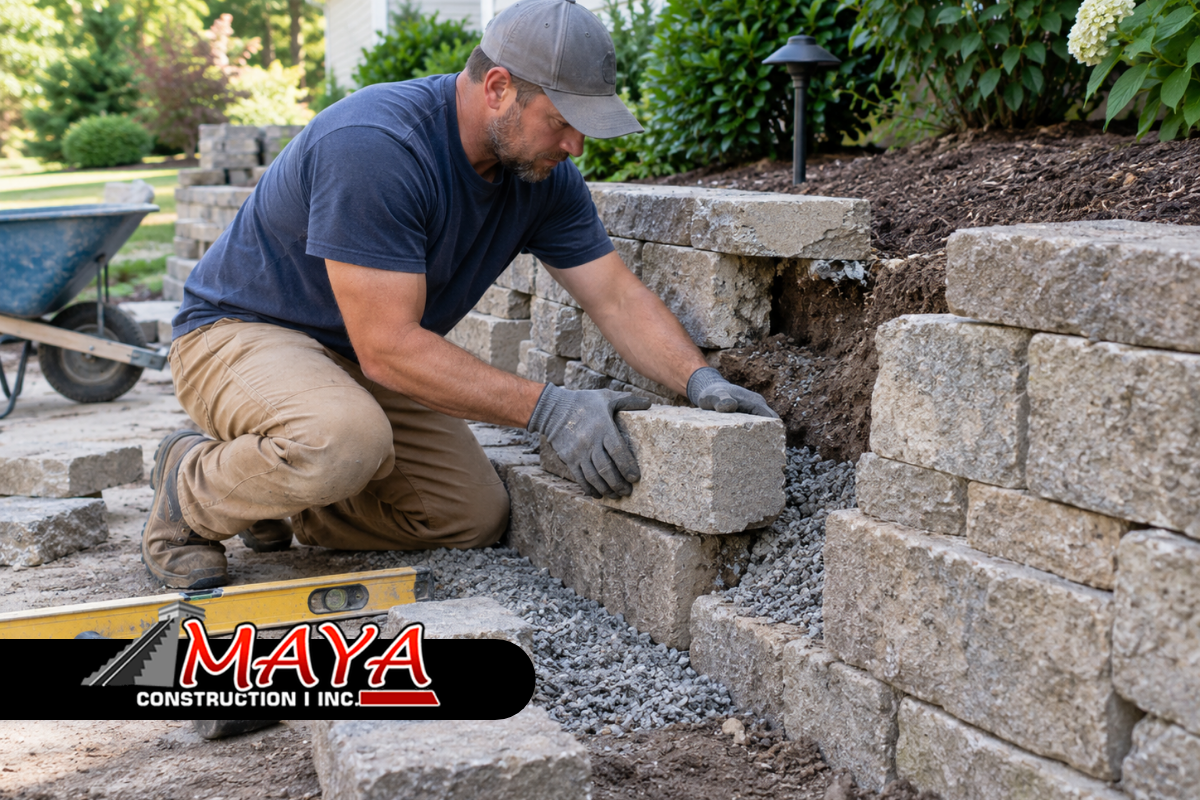
Retaining wall repair can bring strength and order back to an outdoor space when cracks, movement, or drainage problems appear. A damaged wall may affect both the look and safety of your yard, so early action can help prevent larger problems.
At Maya Construction 1 Inc, we guide homeowners toward practical repair choices based on the wall’s condition. By checking visible damage, soil pressure, and drainage, we can choose a clear path that protects the landscape and supports long-term stability.
Early Damage Signs That Should Never Be Ignored
Small changes can point to bigger problems. Retaining wall cracks, loose blocks, bulging areas, or a leaning retaining wall may show that soil or water pressure is affecting the structure.
- Cracks that grow wider over time
- Bulging, bowing, or shifting wall sections
- Loose stones or weak mortar joints
- Water pooling near the wall base
These wall failure signs deserve attention before damage spreads. Our masonry repair tips can help you recognize common surface problems.
Timely Repairs Protect Your Property And Landscape
Delaying retaining wall repair can allow water and soil movement to make the damage worse. A small opening may let water wash soil away from the base. Over time, that pressure can lead to larger cracks, deeper movement, or even partial wall failure.
Early repairs also protect your yard’s appearance. A stable wall supports soil and limits erosion. When customers contact us, we explain the safest next step based on the wall and surrounding ground.
Careful Inspections Reveal The Real Repair Needs
Before choosing a repair method, the full condition of the wall should be reviewed. Surface damage may be easy to see, but problems can also develop behind the wall or below the base. Drainage, soil loss, and foundation movement all matter.
- Watch cracks for changes in width
- Check whether the wall is leaning farther
- Look for blocked drains or washed-out soil
- Inspect the base for gaps or sinking
A careful review separates a simple repair from a larger issue. Homeowners can also see how we build retaining walls and learn what supports a strong wall.
Repair Methods Depend On Damage And Materials
Not every retaining wall needs the same solution. Small cracks may need fresh mortar or a suitable filler, while a leaning retaining wall can require stronger support. Drainage improvements may also be needed when water pressure is causing movement.
For masonry wall repair, matching the original material creates a cleaner result. We may replace weak mortar, reset loose units, reinforce damaged areas, or improve drainage. See our masonry restoration techniques guide for more detail.
Strong Materials Help Repairs Last Much Longer
Good materials play an important role in lasting retaining wall repair. Strong mortar, sound blocks, clean gravel, and proper drainage parts can reduce future movement. The materials should also work well with the wall that is already in place.
- Use durable mortar for masonry joints
- Choose solid blocks or stones for replacement
- Add gravel where better drainage is needed
- Use suitable drain pipes behind the wall
With Maya Construction 1 Inc, you get clear guidance about materials that fit the repair. You can also view our masonry project gallery for finished work.
Professional Support Makes Complex Repairs Safer Overall
Some minor surface repairs may be manageable for homeowners, but larger problems need more care. A wall that is moving, bowing, or losing support can be unsafe to repair without the right tools and experience. Poor repairs may hide damage instead of solving it.
Professional retaining wall repair can reveal drainage, soil, and base problems that are easy to miss. At Maya Construction 1 Inc, we focus on the cause before recommending work.
Frequently Asked Questions
What causes cracks in a retaining wall?
Cracks often develop from soil pressure, water buildup, ground movement, or weak mortar. Small cracks can grow as pressure increases.
Can a leaning wall be repaired safely?
Yes, in many cases. The right solution depends on movement, wall material, drainage, and base condition.
When should I call a professional?
Call a professional when the wall leans, bulges, shifts, has wide cracks, or shows wall failure signs. These issues may need more than surface work.
Does drainage affect retaining wall stability?
Yes. Poor drainage allows water pressure to build behind the wall. Better drainage can reduce pressure and help protect repaired areas.
Can damaged masonry sections be restored?
Often, yes. Loose mortar, cracked joints, and damaged blocks may be restored when the wall still has a stable base.
Restore Outdoor Strength With The Right Repair
A strong wall protects soil, supports the landscape, and improves the look of your property. Addressing damage early can prevent a small problem from becoming a major repair. The right solution should consider cracks, movement, drainage, materials, and the wall’s base.
For retaining wall repair that fits your property, connect with us. We can review the visible problems, explain the next steps in simple terms, and help you plan a practical repair that supports your outdoor space.