
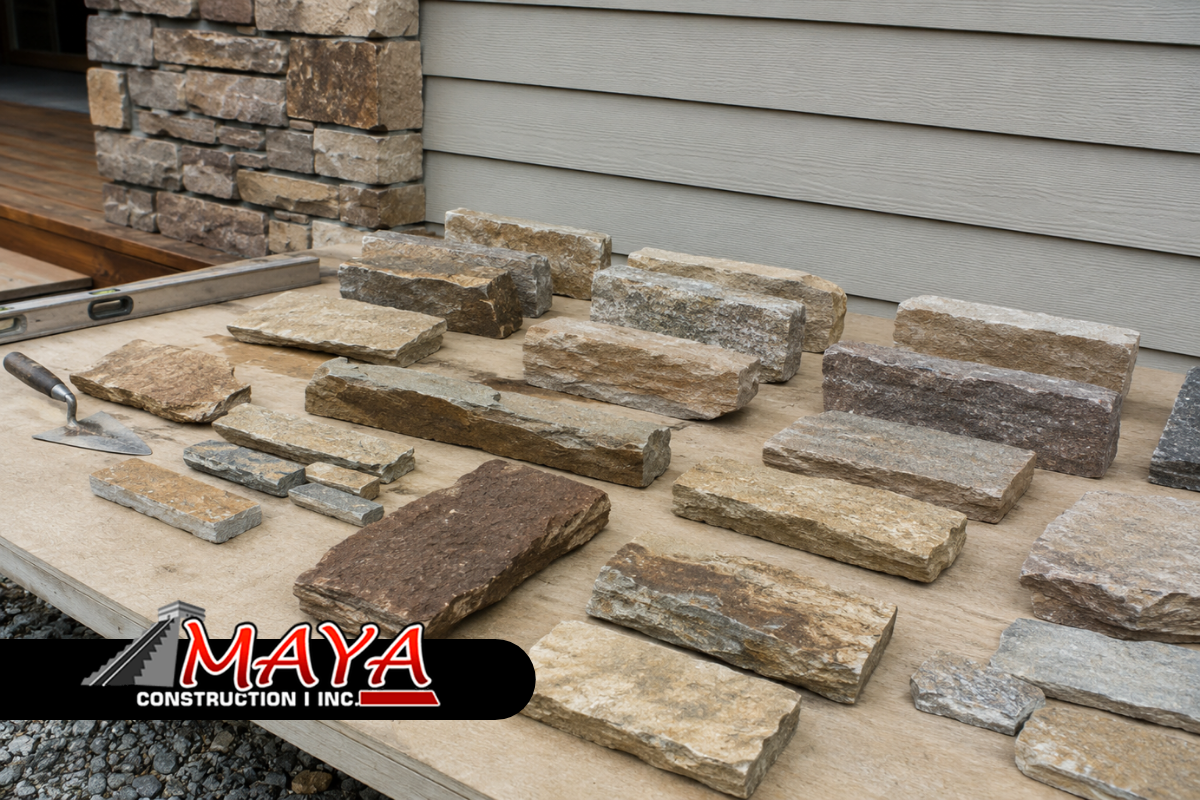
Stone veneer loose pieces can add warmth, texture, and character to many home projects. However, the right choice depends on fit, color, surface conditions, and safe installation. A good plan helps each piece look natural and stay secure.
At Maya Construction 1 Inc, we guide homeowners toward durable results that match their homes. Therefore, we focus on simple choices that reduce waste, prevent damage, and support long-term beauty.
Why Loose Veneer Pieces Need Careful Selection
Loose pieces give you more control over shape, pattern, and placement. They work well around fireplaces, entry walls, columns, and outdoor features. Still, each piece must match the surface and the planned layout.
Problems often begin before installation. An uneven wall, weak mortar, trapped dust, or poor weather timing can lead to stone veneer coming loose. Careful selection lowers the chance of detached veneer stone and future gaps.
Before installation, keep stone veneer loose pieces dry, compare their thickness, and check every surface for small cracks.
Match Stone Types With Your Project Goals
Natural and manufactured options create different looks. Natural stone has unique color and texture, while manufactured veneer is often lighter and easier to arrange. Both can work well when the wall is prepared correctly.
- Stacked stone gives walls a clean, modern pattern.
- Ledgestone creates slim lines with a layered look.
- Fieldstone adds a softer, rustic, uneven finish.
Before choosing stone veneer loose pieces, compare samples beside your siding, trim, or brick. Our brick and stone comparison guide can also help you review style differences.
Color And Texture Should Support Existing Features
Color should connect with the rest of your home. Warm brown, tan, and cream tones can soften an exterior, while gray shades often create a cleaner look. Texture also changes how light moves across the wall.
Check samples in morning, afternoon, and evening light. This step matters because shadows can make the same piece look darker or rougher. A balanced palette keeps loose exterior stone from looking added later.
Proper Sizing Prevents Gaps And Weak Bonds
Measure the wall before ordering materials. Include corners, windows, doors, and other openings. Then add a small amount for cuts and breakage. Accurate measurements make layout planning easier and reduce wasted pieces.
- Lay several pieces on the ground first.
- Mix large and small shapes for balance.
- Keep joint spacing steady across the layout.
- Trim only after checking the full pattern.
Dry fitting also helps prevent veneer bond failure. When stone veneer loose pieces sit flat, mortar can spread more evenly and hold each section with less pressure.
Surface Preparation Protects Your Finished Stonework
A strong result starts with a clean, stable wall. Dirt, paint, moisture, or loose material can weaken the bond. In many projects, a proper base, metal lath, and scratch coat are needed before stone placement.
At Maya Construction 1 Inc, we check the wall before work begins. We also review drainage and water paths because trapped moisture can loosen mortar over time. Our stone veneer installation process explains the main preparation stages.
Installation Habits That Reduce Future Repairs
Mortar should be mixed to the correct texture and used in small sections. Each stone needs full contact with the wall. A slight pressing and turning motion can help remove air pockets and improve the bond.
- Keep the back of every piece clean.
- Avoid working during heavy rain or strong heat.
- Follow curing times before washing the surface.
- Check corners and edges for full support.
These habits help stop stone veneer coming loose. They also reduce movement around joints, where cracks and water entry often begin.
Frequently Asked Questions
Why does stone veneer sometimes become loose?
Common causes include poor wall preparation, weak mortar, moisture, and temperature changes. Early checks can stop a small issue from becoming a larger repair.
Can one loose veneer piece be replaced?
Yes, one piece can often be removed and reset. However, the wall behind it should be checked for water damage or a weak base.
How do I spot veneer bond failure?
Look for movement, open joints, cracks, or a hollow sound when the area is lightly tapped. These signs may show when veneer needs repair.
Should I seal exterior stone veneer?
A breathable sealer may help in some settings. Still, the right product depends on the stone type, climate, and wall design.
How often should stone veneer be checked?
Inspect it at least once a year and after severe weather. Our stone veneer maintenance checklist makes routine reviews easier.
Plan Repairs Before Small Problems Grow Larger
Small movement can become a safety and moisture problem if ignored. Therefore, inspect cracks, edges, and joints as soon as you notice change. A fast review can protect nearby pieces and the wall behind them.
With Maya Construction 1 Inc, you receive clear guidance on stone veneer loose pieces, repairs, and restoration. Review our stone restoration approach, then reach out our team about your loose stone for the next practical step.