
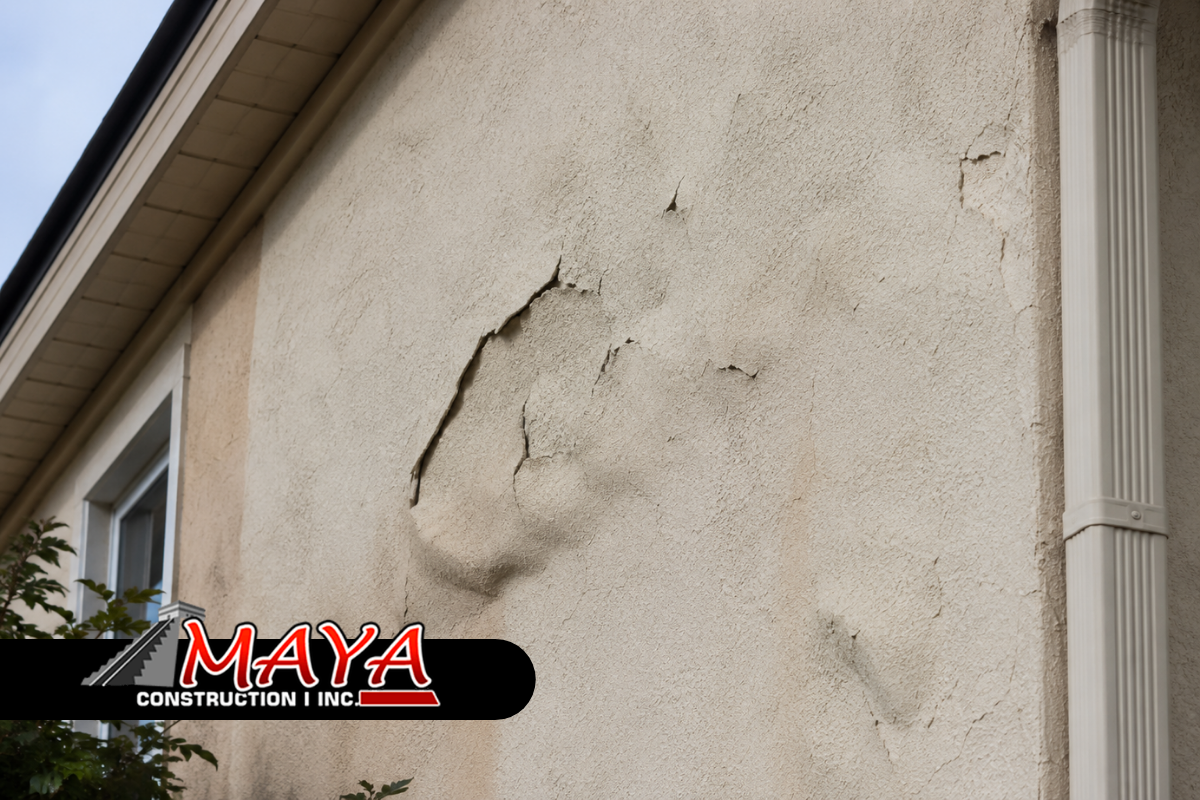
Stucco delamination signs often begin with small changes that are easy to miss. A wall may show light cracks, raised areas, or a surface that no longer looks even. At Maya Construction 1 Inc, we help homeowners understand these warning signs before hidden damage grows.
Simple checks can reveal whether the finish is still bonded well. A hollow sound, loose sections, or stucco separating from wall surfaces may point to deeper trouble. Recognizing stucco delamination signs early can protect walls, reduce moisture risks, and support a safer exterior.
How Stucco Layers Begin Losing Their Proper Bond
Stucco works as a group of layers attached to the outside wall. When one or more layers lose their grip, spaces form behind the finish. This process can start slowly, even when the surface still looks mostly normal.
Over time, detached stucco layers may bulge, shift, or crack. Moisture can then move into those open spaces and affect the materials below. Our guide to common stucco problems explains how these issues can develop and why early checks matter.
Common Conditions That Weaken Stucco Adhesion Over Time
Water is one of the main causes of failing stucco adhesion. It may enter through cracks, worn sealant, poor flashing, or gaps near windows and doors. Once trapped, moisture can weaken the bond between each stucco layer.
- Poor installation or rushed curing
- Low-quality base materials
- Strong temperature changes
- Small foundation movement
- Blocked gutters or poor drainage
At Maya Construction 1 Inc, we look beyond the visible surface because stucco delamination signs may not show the full problem.
Visible Changes That Point Toward Hidden Wall Damage
Some stucco delamination signs are easy to see during a slow walk around the home. Look for straight cracks, star-shaped cracks, blisters, shadow lines, or sections that seem raised. These changes may show that the finish is pulling away underneath.
Chalky areas can also suggest that the surface is breaking down. Pay close attention near windows, doors, roof lines, and the bottom of walls. These spots often collect water first and may show the early signs of stucco failure sooner.
Simple Tap Testing Can Reveal Loose Stucco Areas
A light tap test is a simple way to check suspicious areas. Use a rubber mallet or the handle of a screwdriver. Tap gently and compare several nearby spots. Solid stucco usually makes a firm sound, while loose material may sound empty.
- Start near cracks and raised sections
- Check around windows and doors
- Mark each hollow stucco sound
- Retest later for any spread
This test does not replace a full inspection, but it can help you map possible trouble areas without opening the wall.
Why Early Repairs Protect More Than Appearance Alone
Small cracks or bubbles may seem cosmetic, yet they can allow water to move behind the finish. If ignored, the damage may reach wood, insulation, or wall boards. Mold, soft framing, and larger repairs can follow.
Repairing stucco delamination signs early also helps support comfort inside the home. Wet wall materials may reduce insulation performance and increase heating or cooling needs. Review our stucco repair process to understand what proper correction may involve.
Practical Steps After Finding Loose Stucco Sections
After finding stucco separating from wall areas, document each spot before making changes. Photos of stucco delamination signs help a contractor compare damage, explain the cause, and plan the right repair.
- Mark cracks, bulges, and loose zones
- Take clear photos from several angles
- Cover exposed areas from rain
- Avoid pulling on firmly attached material
- Arrange a detailed stucco inspection
With Maya Construction 1 Inc, we explain the safest next step based on the condition of the wall, not only the visible finish.
Frequently Asked Questions
What causes stucco to pull away from walls?
Water entry, poor bonding, weak materials, fast curing, and wall movement can all cause separation. The exact cause should be confirmed before repairs begin.
Can a hollow sound always mean delamination?
A hollow sound often points to a loose area, but nearby wall features can affect the noise. A professional inspection gives a clearer answer.
Are small cracks always a serious problem?
Not every crack means major damage. However, growing cracks, bulges, stains, or soft areas should be checked soon.
Can homeowners repair loose stucco themselves?
Small surface cracks may be manageable, but deeper separation usually needs professional work. Hidden moisture or damaged wall layers can make simple patching fail.
How often should stucco walls be inspected?
A yearly exterior check is useful, especially after strong storms or winter weather. Our stucco maintenance tips can help support longer wall life.
Professional Stucco Care Supports Long-Term Exterior Strength
Regular checks for stucco delamination signs can reduce the chance of detached stucco layers. Keep gutters clear, renew sealant when needed, and watch for changes after heavy rain or freezing weather.
Our team at Maya Construction 1 Inc can inspect failing stucco adhesion, explain the cause, and recommend a practical repair plan. For local help, review our Westchester County stucco services or stop by our contact page to discuss the wall condition.