
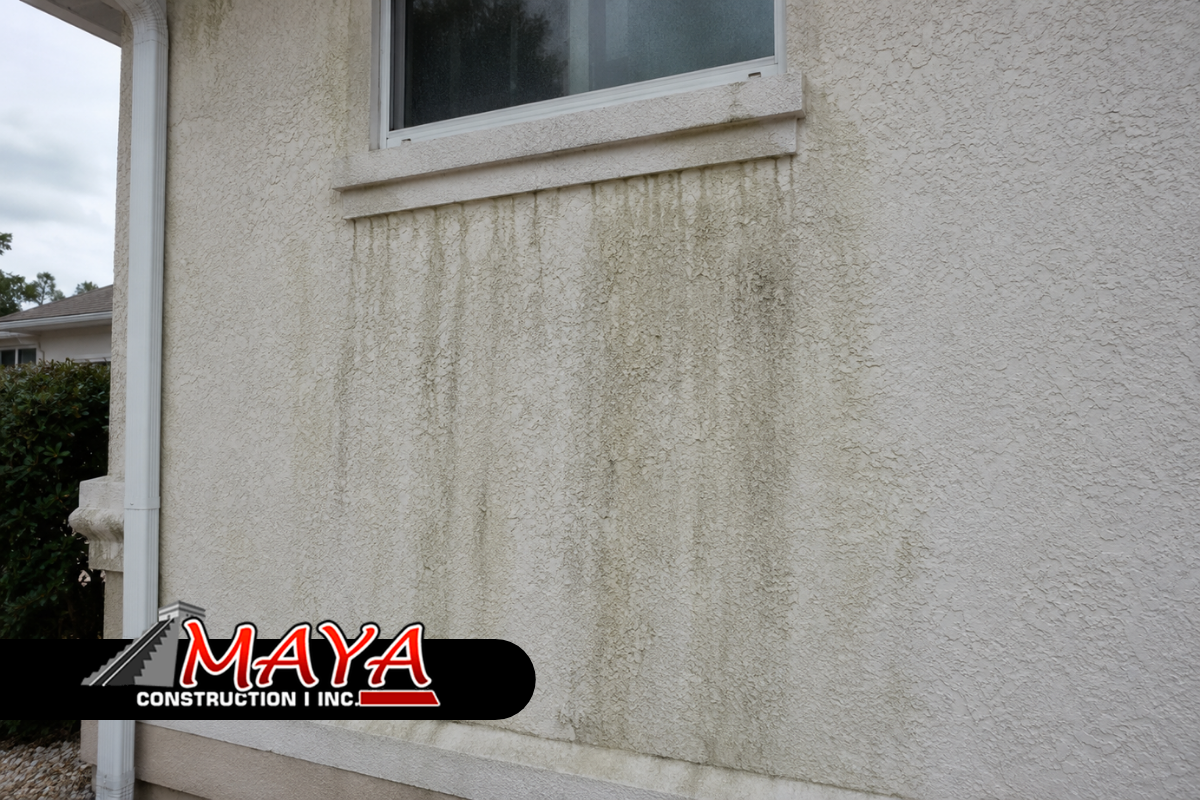
Stucco staining causes can quickly reduce the clean, bright look of your home. Green, black, white, or rust-colored marks may seem cosmetic at first. However, they can also point to moisture, dirt, or material problems that deserve attention.
At Maya Construction 1 Inc, we help homeowners understand what these stains mean. With the right inspection and care, you can protect your walls, prevent bigger repairs, and keep your exterior looking well maintained.
Moisture Often Creates the Most Visible Stucco Stains
Moisture is one of the most common stucco staining causes. Water can enter through cracks, weak seals, damaged flashing, or gaps near windows. Once trapped, it supports mold, mildew, algae, and dark patches that may grow over time.
Because water damage can spread behind the surface, early action matters. Our guide to common stucco problems explains other signs that may appear near stained areas.
Weather and Pollution Can Discolor Exterior Stucco Walls
Sunlight, heat, cold, wind, and rain can slowly change the color of stucco. Strong UV rays may fade coatings, while temperature changes can create small cracks that collect moisture and dirt.
Air pollution, road dust, pollen, salt, and smoke can also cause discolored stucco walls. These particles settle into the rough finish and become harder to remove when cleaning is delayed. Nearby trees, busy roads, and coastal air can make buildup happen faster.
Although weather cannot be controlled, routine washing and timely sealing can reduce its effect. Understanding these stucco staining causes also helps you choose care based on your home’s location and exposure.
Mold Mildew and Algae Leave Different Surface Marks
Black stains on stucco often suggest mold or mildew, especially in shaded areas. Green stains on stucco usually come from algae or moss. Both grow faster where walls stay damp and receive little sunlight.
- Check areas below gutters and roof edges.
- Inspect corners, window ledges, and shaded walls.
- Watch for stains that return after cleaning.
These steps support how to inspect stained stucco without damaging the finish. At Maya Construction 1 Inc, we also look for the moisture source instead of treating only the visible mark.
White Efflorescence Signals Hidden Moisture Behind Stucco Surfaces
Efflorescence appears as a white, chalky layer. It forms when water moves through stucco, carries salts to the surface, and then dries. The residue may brush away, but the moisture source still needs attention.
Seal small gaps, improve drainage, and keep water away from the wall. Our stucco maintenance tips can help you reduce future surface staining on stucco.
Rust Runoff Can Create Stubborn Brown Stucco Streaks
Rust marks often begin near gutters, flashing, fasteners, or downspouts. As metal breaks down, rain carries reddish particles onto the wall. These streaks can be difficult to remove with normal soap and water.
- Inspect metal parts for early rust.
- Repair leaks that keep metal wet.
- Replace badly corroded pieces when needed.
For damaged areas, review our stucco repair overview before choosing the next step.
Safe Cleaning Methods Protect Texture and Wall Color
Light dirt may come off with warm water, mild soap, and a soft brush. Avoid strong pressure because it can chip the finish or push water into cracks. Always test any cleaner on a small hidden area first.
Different stucco staining causes need different solutions. Mold cleaners may not remove rust, while harsh acids can harm the finish. Start gently, rinse well, and stop if the texture begins to loosen.
When stains affect the finish, our stucco color matching guide explains how careful repair can keep the wall looking even.
Frequently Asked Questions
What are the main stucco staining causes?
Common sources include moisture, mold, algae, dirt, rust runoff, pollution, and salt deposits. A close inspection helps identify the right cleaning or repair method.
Why do black stains appear on stucco?
Black marks often develop from mold, mildew, dirt, or water that stays on shaded walls. Repeated stains may point to a leak or drainage issue.
Can green stucco stains return after cleaning?
Yes. Algae can return when the wall stays damp, shaded, or covered by plants. Better airflow and drainage can lower the risk.
Is white residue always serious stucco damage?
Not always. White residue may be efflorescence, but it still shows that water is moving through the wall and should be checked.
When should a professional inspect stained stucco?
Call a professional when stains spread, return quickly, appear near cracks, or come with soft, loose, or damaged areas.
Professional Care Helps Preserve Stucco Beauty Long Term
Regular inspections and early repairs can prevent stains from becoming larger problems. Keep gutters clear, direct water away from walls, trim nearby plants, and clean dirt before it settles deeply.
- Schedule seasonal exterior checks.
- Repair cracks and weak seals early.
- Use breathable coatings when appropriate.
With Maya Construction 1 Inc, you receive clear guidance from a local team. Visit our Dutchess County stucco service page or get in touch with us to discuss stains, repairs, and long-term protection.