
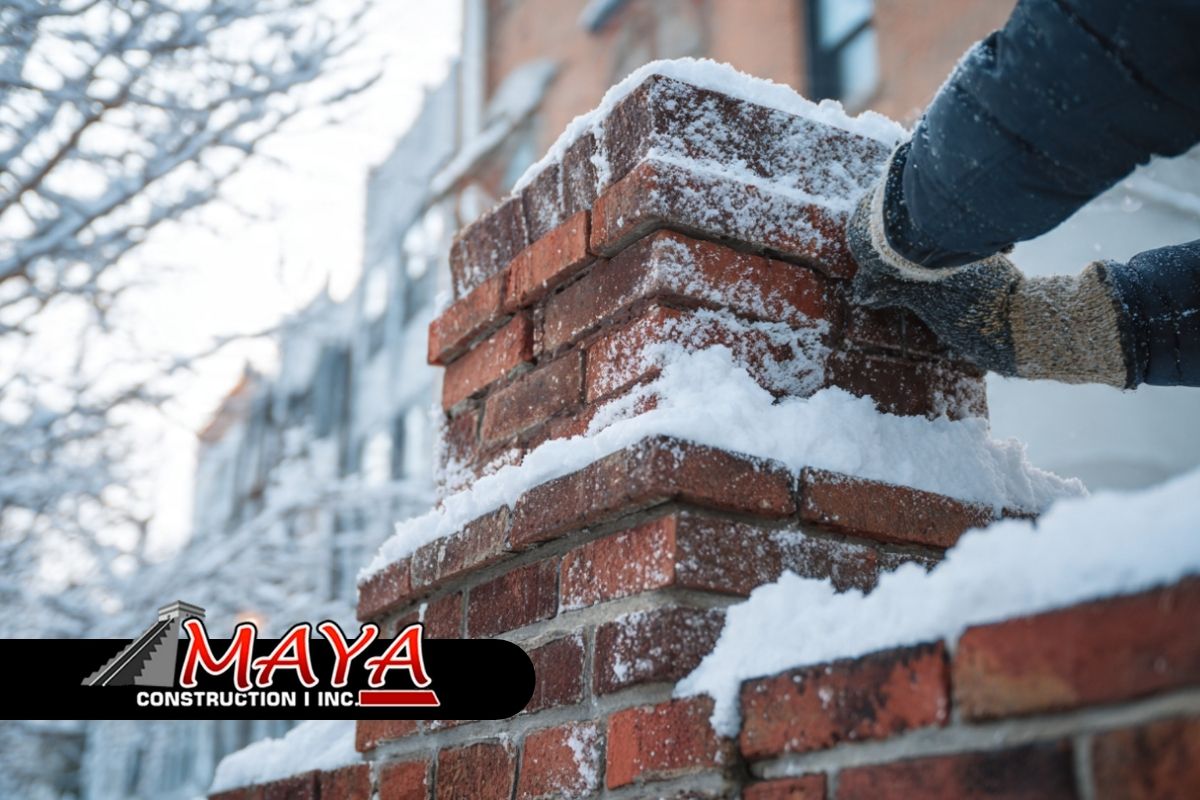
Confronting winter can feel tough, especially when you want a warm, safe home. Your chimney helps keep your house cozy. However, freeze-thaw cycles and heavy snow can cause chimney spalling, crown cracks, or a weakened chimney cap in snow.
These issues can look small at first. Still, they can grow into serious damage. Use this Winter Chimney Restoration Checklist to spot problems early. You will also learn waterproofing steps and snow-season tips. As a result, your home stays snug and protected all winter.
Understanding Common Winter Chimney Issues
Before repairs, learn what causes damage in winter. During freeze-thaw cycles, water in brick and mortar expands when it freezes. Over time, this can weaken the chimney and lead to chimney spalling. You may also see mortar crumbling or small gaps where water slips in.
Crown cracks matter too. The chimney crown sits at the top and helps block rain and melting snow. Once crown cracks appear, water enters more easily. Therefore, follow this Winter Chimney Restoration Checklist with clear priorities, so you prevent bigger problems later.
Inspect the Chimney Exterior for Visible Damage
Start the Winter Chimney Restoration Checklist by checking the outside structure. Look for loose bricks, worn mortar, or spots where water can sit. Also, watch for chimney spalling, which often looks like chips or flakes on brick faces.
Use a bright flashlight and a sturdy ladder for a closer view. Wear gloves and eye protection. Then, inspect all sides, including the back if you can reach it. Early notes help you plan fixes before freeze-thaw cycles make damage worse.
- Scan for loose or missing bricks.
- Check mortar joints for crumbling or gaps.
- Look for chimney spalling chips and flakes.
- Mark damaged spots to address soon.
Check the Chimney Cap and Crown for Cracks
Next, inspect the crown and cap to keep moisture out of the flue. A stable crown helps prevent water from pooling. Meanwhile, a secure chimney cap in snow helps block debris and animals. Look closely for crown cracks and small gaps near the edges.
Remove snow from the cap so you can see it clearly. Clear ice carefully. If you spot hairline crown cracks, note them right away. Sealing early can reduce frost damage and help prevent leaks inside your home.
- Clear snow around the chimney cap in snow before inspecting.
- Look for crown cracks, chips, or separation lines.
- Check the cap for looseness, rust, or missing fasteners.
- Plan repairs quickly to limit water entry.
Remove Debris and Blockages from the Chimney
Cleaning is a core part of the Winter Chimney Restoration Checklist. Leaves, twigs, and nests can block the flue. As a result, you may face smoke backup or fire risks. Also, soot and creosote can ignite under high heat, so removal is important.
Use a chimney brush or a professional vacuum setup. Then, shine a light down the flue to confirm it is clear. If you do not have a cap, consider adding one. This way, you reduce future clogs and support steady airflow.
- Remove visible debris near the top opening.
- Brush out soot and creosote buildup.
- Confirm the flue is open using a flashlight.
- Add or upgrade a cap to prevent new blockages.
Evaluate the Chimney Flashing for Leaks
Flashing seals the joint where the chimney meets the roof. Over time, flashing can pull away, rust, or crack. Consequently, rain and melting snow can seep into your attic and walls. So, checking this area is a smart step.
From the attic, look for damp insulation or dark stains. On the roof, check for gaps near shingles and metal edges. If you find openings, seal them with roofing cement or replace the flashing. Proper flashing protects ceilings and insulation from water damage.
Waterproofing Your Chimney for Winter
Waterproofing is one of the strongest steps in a Winter Chimney Restoration Checklist. It helps reduce moisture entry in brick and mortar. Therefore, it lowers the risk of freeze-thaw cycles damage, chimney spalling, and white residue on masonry.
Choose a breathable, silicone-based sealant that repels water while letting trapped moisture escape. Clean the chimney first, then let it dry fully. After that, apply the product as directed. If you want a local team to evaluate repairs first, explore chimney restoration in Dutchess County, NY.
Ensure Proper Ventilation in the Chimney
Good airflow helps smoke and harmful gases move out of your home. Check that the damper opens and closes smoothly. If the damper is warped or rusted, consider replacing it with a tight, modern option. As a result, you can improve draft control.
Watch for warning signs like smoke lingering indoors, cold drafts, or fireplace glass fogging. A top-sealing damper can help create a tighter seal when not in use. For area-specific guidance, see chimney restoration in Orange County, NY.
Deal with Snow Build-Up on the Chimney
Snow and ice can stress masonry and increase water risks during melt. Remove heavy snow around the cap and crown with a soft broom. Avoid metal tools, since they can damage masonry or metal parts. Also, clearing snow helps you spot crown cracks early.
Keep gutters clear so meltwater drains away. Ice dams can push water under shingles and against the chimney. If you need help spotting weak points near the roofline, review chimney restoration in Westchester County, NY.
Frequently Asked Questions
How do freeze-thaw cycles damage a chimney?
Water can soak into brick and mortar. Then it freezes and expands. Over time, this can weaken materials and cause cracks or chimney spalling.
What does chimney spalling look like?
It often appears as flaking, peeling, or chipping on brick faces. These spots can spread quickly in winter if moisture keeps getting inside.
Why are crown cracks a big concern in winter?
Crown cracks let melting snow and rain enter the chimney structure. Consequently, freezing temperatures can widen those cracks and speed up damage.
Should I remove snow from a chimney cap in snow?
Yes, gently clearing snow helps you inspect the cap and crown. It also reduces moisture pooling and lets you catch problems sooner.
Is waterproofing safe for brick chimneys?
Yes, when you use a breathable sealant designed for masonry. It repels water while letting trapped moisture escape, which helps reduce freeze damage.
Secure Professional Chimney Maintenance Services
A yearly inspection can complete your Winter Chimney Restoration Checklist. A certified chimney sweep can clean the flue, check the liner, and flag safety risks. They can also look for carbon monoxide concerns and hidden structural issues.
Look for strong certifications and ask for a written report. If you want support in your area, you can review chimney restoration in Putnam County, NY. If you are ready to schedule help, reach out through the contact page.
Keep Your Home Warm and Safe All Winter
Following a Winter Chimney Restoration Checklist helps you stay ahead of common winter damage. From spotting chimney spalling to sealing crown cracks and adding waterproofing, each step supports long-term safety. Furthermore, steady airflow helps your fireplace work better.
Spend a little time now to avoid big repairs later. With smart checks and timely fixes, you can enjoy cozy fires and a safer home through the cold season.