
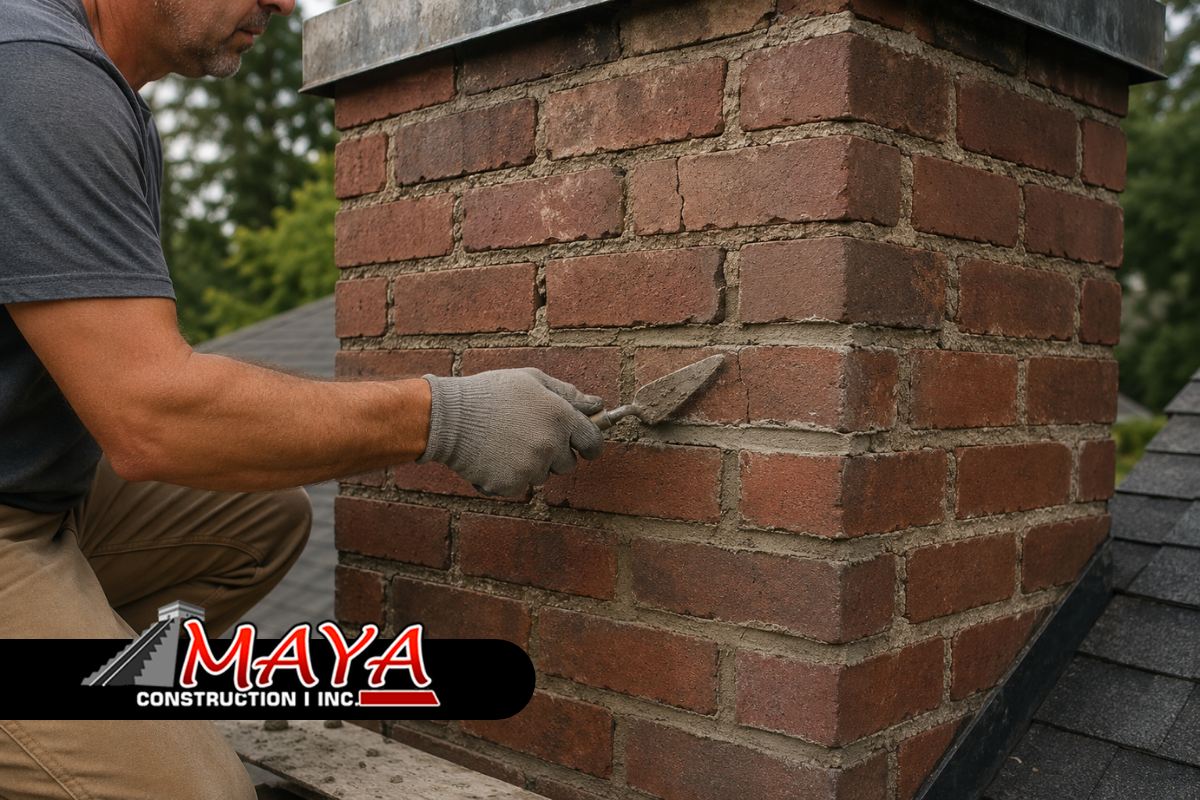
Chimney mortar joint repair protects your home from water, loose brick, and costly structural damage. Over time, rain, snow, wind, and heat can weaken the joints that hold the chimney together.
At Maya Construction 1 Inc, we help homeowners spot early warning signs and choose the right repair path. This guide explains what to look for, how repointing works, and when professional service is the safer choice.
Early Warning Signs Your Chimney Mortar Needs Attention
Deteriorated chimney mortar often starts with small cracks, rough edges, or loose pieces near the base. You may also notice missing mortar on chimney joints, damp spots indoors, or brick faces that begin to flake.
- Cracks that grow after winter weather
- Loose mortar that falls when lightly touched
- Open gaps between bricks
- Rust marks or moisture near the fireplace
These chimney repointing signs should not be ignored. Early chimney mortar joint repair can stop water from moving deeper into the masonry and reduce the chance of a larger rebuild.
Why Timely Repointing Protects Your Entire Home
Strong mortar keeps water out and helps the chimney stay stable. When joints fail, moisture can enter the brick, flue area, attic, and nearby walls. During cold weather, trapped water can freeze, expand, and create wider cracks.
Our team at Maya Construction 1 Inc explains repair options clearly before work begins. Homeowners in Dutchess County can review our Dutchess County chimney restoration services for help with damaged joints and worn masonry.
Safe Tools and Materials for Reliable Mortar Repairs
Proper tools help protect both the brick and the worker. A cold chisel, masonry hammer, wire brush, bucket, trowel, pointing tool, spray bottle, gloves, eye protection, and dust mask are common items for small repointing tasks.
- Use mortar made for chimney or masonry repair
- Avoid mixes that are harder than the brick
- Keep clean water ready for mixing and misting
- Use stable access equipment for raised work
Chimney mortar joint repair also requires safe ladder or scaffold use. For taller chimneys, steep roofs, or wide damage, trained help is often the best choice.
Proper Preparation Creates Stronger and Cleaner Results
Preparation begins by removing loose debris and brushing dust from the joints. Clean spaces allow fresh mortar to bond better. Next, lightly mist the area so dry brick does not pull moisture from the new mix too quickly.
Protect nearby brick faces with tape or paper when needed. For homeowners comparing repair methods, our guide to repointing and tuckpointing differences explains how each method serves a different purpose.
Removing Damaged Mortar Without Harming Nearby Bricks
Old mortar should be removed slowly and carefully. Hold the chisel at a shallow angle, then tap lightly to avoid breaking brick edges. Work in small sections and clear dust often so the joint depth stays visible.
When chimney joint damage is deep, loose bricks may move during removal. At Maya Construction 1 Inc, we check the full masonry area before adding new material. This helps prevent fresh mortar from hiding a larger stability problem.
Applying Fresh Mortar for Durable Weather Resistance
Mix the mortar until it is smooth and firm, not runny. Press it fully into each cleaned joint, then shape the surface with a pointing tool. Small sections are easier to control and reduce gaps or weak spots.
- Fill the deepest parts of the joint first
- Compact the mortar with steady pressure
- Shape each joint to move water away
- Clean extra mortar before it hardens
Good chimney mortar joint repair depends on full joints and even tooling. Homeowners in Putnam County can visit our Putnam County chimney restoration page for local service details.
Frequently Asked Questions
What causes deteriorated chimney mortar over time?
Weather, age, heat changes, and trapped moisture can weaken mortar. Freeze and thaw cycles often make small cracks wider, especially when water enters open joints.
What are common chimney repointing signs?
Look for cracks, loose pieces, open gaps, damp interior walls, rust marks, or brick movement. These signs often mean the mortar no longer seals the chimney well.
Is missing mortar on chimney joints dangerous?
Yes, open joints let water enter and may reduce stability. Fast chimney mortar joint repair can protect the brick, flue area, and nearby parts of the home.
When to repoint a chimney safely?
Repoint when joints crack, crumble, or lose depth. Spring and mild fall weather are often suitable, but urgent damage should be checked as soon as possible.
Can homeowners handle small mortar repairs themselves?
Minor, easy-to-reach spots may be manageable with the right tools. However, roof access, wide damage, or loose bricks should be handled by trained professionals.
Long-Term Care Keeps Your Chimney Stable Longer
Inspect the chimney each year and after severe storms. Watch for new cracks, loose caps, damaged crowns, and indoor moisture. Regular cleaning also helps limit buildup that can hold water near the masonry.
With Maya Construction 1 Inc, you receive clear guidance based on the condition of your chimney. Explore our Westchester County chimney restoration services, or use our chimney repair consultation page to request an inspection.